By David Parks · eXp Realty · The Apollo Group · 2 min read
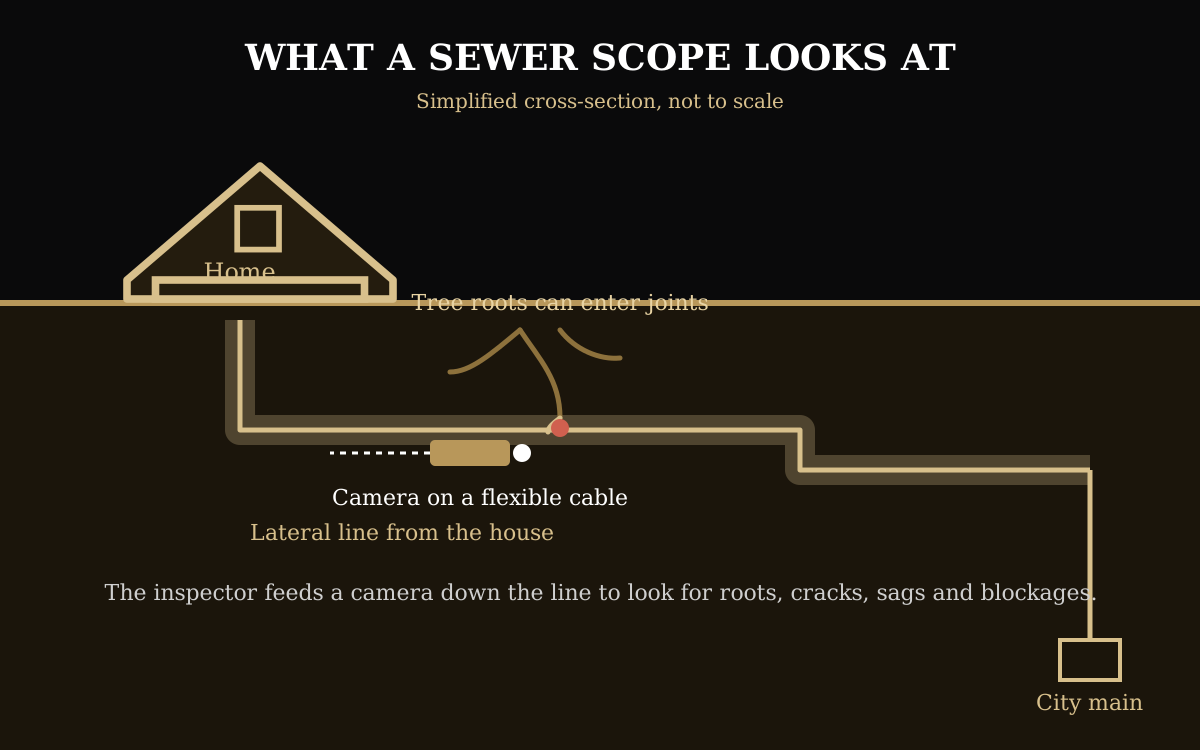
A sewer scope inspection sends a waterproof camera through the home’s sewer lateral, the pipe running from the house to the main line, to look for cracks, roots, sags, and breaks. It is one of the most useful add-on inspections for older homes.

The sewer lateral carries wastewater from your home to the city main or septic system. In many places the homeowner is responsible for the pipe from the house to the main, including the part under the yard or street, though rules vary by city and district, so ask.
| Key point | What it means |
|---|---|
| Clay (vitrified clay) | Durable but made of short joints that tree roots can enter. |
| Cast iron | Long-lasting, but can corrode and flake inside over decades. |
| Orangeburg | A tar-and-paper fiber pipe used mid-century that can deform or collapse. |
| PVC or ABS plastic | Common in newer homes and replacements, resistant to roots and corrosion. |
Inspectors note root intrusion, cracked or offset joints, “bellies” where the pipe sags and holds water, heavy scale, and collapsed sections. A recording lets you and a plumber review exactly what was seen.
Homes built before the 1970s often have older pipe materials, and mature trees nearby raise the odds of roots. Repair or replacement can be a major expense, so many buyers scope the line before their inspection deadline and use the results in negotiation.
This article is general information, not legal, tax, financial or inspection advice. Every home and situation is different, so confirm details with a licensed inspector, lender, attorney or tax professional.

David is a Greater Denver real estate advisor with eXp Realty and The Apollo Group (Colorado broker license FA100103211). He has closed more than $55 million in volume, earned eXp Icon status in 2025, and holds a 5.0 rating on Zillow from 27 verified reviews.
Denver market updates, new listings, and local tips — no spam, unsubscribe anytime.